
Service · Content Team Guidance
Your content team, running on a real system.
Executable roadmaps, action plans, and QA for SEO and content teams - intent mapping, content calendars, and dissolving the keyword cannibalization that quietly caps your rankings.
This is for you if…
✓Your team publishes consistently but can’t tell which keywords need which page or format
✓Multiple pages compete for the same keywords - and nobody owns the fix
✓You want quarterly clarity: what to write, why, and how to know it’s working
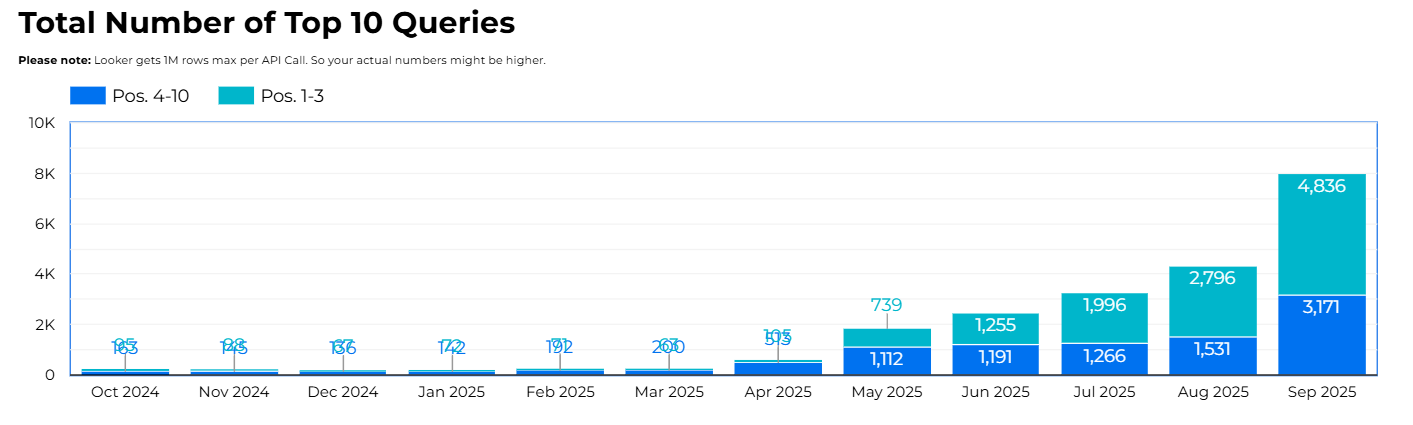
A content system working: 183 → 8,000+ top-10 queries in a year.
What you get
Quarterly content roadmap
A calendar built from intent data - every piece mapped to a keyword, page type, and funnel stage.
Keyword-to-page mapping
Which keywords deserve a blog post, a comparison, a landing page - so intent and format always match.
Cannibalization audit & fix plan
Find the overlapping pages, decide the winners, consolidate or differentiate the rest.
QA & team development
Review loops on briefs and drafts, plus training that levels your team up for the AI-search era.
How it works
1
Map
Audit your keyword landscape and content inventory - intents, gaps, overlaps.
2
Systematize
Roadmap, calendar, briefs, and the QA loop - a machine your team runs.
3
Level up
Quarterly reviews and training until the system runs without me.
One keyword, one owner
An excerpt of the keyword-to-page map your calendar is built from.
Keyword
Intent
Format
Owning page
what is quote-to-cash
Informational
Guide
/blog/quote-to-cash
best ar automation software
Commercial
Comparison
/best-ar-automation
invoice automation pricing
Transactional
Landing page
/pricing
quickbooks invoice limits
Informational
Guide
/blog/quickbooks-limits
This logic ships as a free tool soon.
How I actually do it
The specifics - because “best practices” is not a method.
1
Keyword-to-page ownership
Every keyword gets exactly one owning page, mapped by intent to the right format - guide, comparison, landing page. This alone dissolves most cannibalization before it starts.
2
The reoptimisation framework
Refined across 100+ page rebuilds at SmartClick: diagnose why a page decayed, decide rebuild vs. consolidate vs. redirect, and verify the recovery in the data.
3
QA gates your team runs without me
A pass/fail rubric for every brief and draft - intent match, internal links, cannibalization check - so quality stops depending on who reviewed it that week.
“Your team doesn’t need more content. It needs to know which page owns which keyword - and a system that keeps it true.”
- Davor Karafiloski
Fair questions
100+
page rebuilds behind my reoptimisation framework
Try the thinking before you hire it.
The Intent Analyzer on this site is a slice of the same system: paste your keywords, see the intent and page type each one needs.
Email me →
Intent Analyzer - launching soon
Where this fits
Intent Analyzer →Free tool - classify keywords by intent and format
SEO Auditing + Roadmaps →Know what growth looks like before you spendSEO Consultancy →Senior direction, quarter after quarter
© 2026 Davor Karafiloski · LinkedIn